Mobile / WhatsApp
E-mail
Contents
To seal expansion joints around windows and doors, use low expansion PU foam inside the installation gap for filling and insulation, then apply suitable silicone sealant on the exterior and interior joint surface for waterproofing, air sealing, and a clean finish.
Window and door expansion joints are the gaps between the frame and the surrounding wall opening. These joints need to handle building movement, frame expansion, temperature changes, moisture, wind pressure, and installation tolerance. If the joint is only filled with foam but not sealed properly, water and air may still enter. If it is only sealed with silicone on the surface but the inner gap is empty, insulation and support may be weak.
A reliable sealing system usually combines two different materials: low expansion foam for controlled gap filling and silicone sealant for external weatherproofing and visible joint finishing. The key is to understand where each product works best and how to apply them without over-filling, cracking, shrinkage, or poor adhesion.
Silicone sealant is mainly used on the visible joint surface around window and door frames, especially where waterproofing, air sealing, UV resistance, and flexible movement are required. It forms the outer protective layer that prevents rainwater, dust, and air leakage from entering the installation gap.
Sealant is applied around the outside edge of window and door frames to block rainwater, wind, and outdoor contaminants.
On the indoor side, sealant helps create a neat finish and improves air sealing between the frame and wall surface.
Silicone is useful where aluminum, PVC, wood, painted walls, tiles, concrete, or masonry meet the frame edge.
For exterior window and door joints, neutral cure silicone sealant is often preferred because it is suitable for many construction substrates and is less likely to create corrosion issues on metal frames compared with unsuitable acidic sealants. It also offers strong weather resistance, which is important for joints exposed to rain, sunlight, heat, and cold.
However, silicone sealant should not be used as a deep gap filler. If the joint is too wide or too deep, the inner space should be filled and controlled properly before surface sealing. A deep empty joint filled only with silicone may waste material, cure unevenly, and perform poorly under movement.
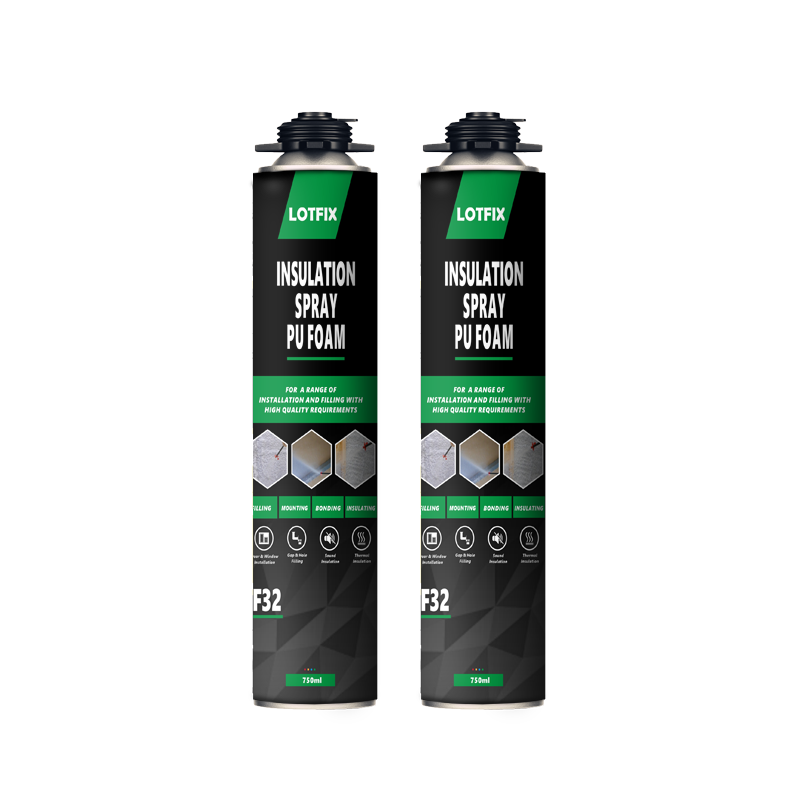
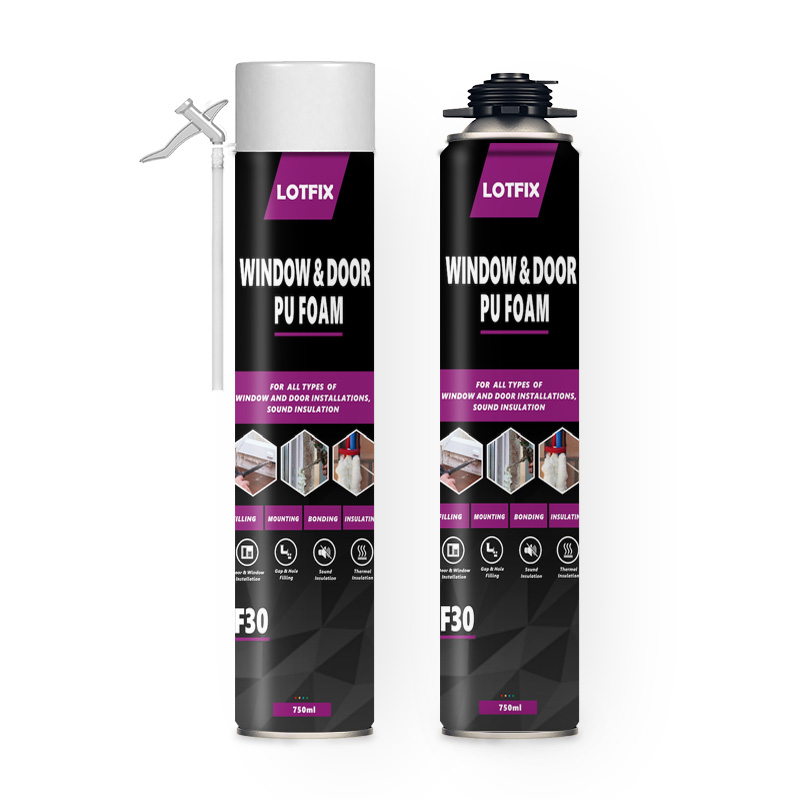
Low expansion PU foam is used inside the gap between the window or door frame and the wall opening. Its main function is gap filling, thermal insulation, sound reduction, and support for the installation space without pushing the frame out of alignment.
Compared with ordinary high-expansion foam, low expansion foam is more suitable for window and door installation because it expands in a more controlled way. This helps reduce the risk of frame deformation, uneven pressure, difficult trimming, and poor closing performance after installation.
The gap between window frames and masonry or concrete wall openings.
The space around door frames where insulation and controlled filling are needed.
Irregular installation gaps that need to be filled before final surface sealing.
Perimeter cavities where air leakage, sound transmission, or thermal bridging should be reduced.
Frame installation areas where excessive expansion could affect alignment or operation.
Low expansion foam should be applied carefully and in the correct amount. It should fill the joint without excessive pressure. After curing, excess foam can be trimmed, but the trimmed foam surface should not be left exposed outdoors because foam is not designed as the final weatherproof layer.
In exterior applications, the cured foam should be protected by silicone sealant, flashing, trim, or another suitable covering system. Exposed foam can degrade under UV exposure and moisture, which may reduce the long-term performance of the window or door joint.
Low expansion foam and silicone sealant are often used together because they solve different parts of the same joint problem. Foam fills and insulates the inner cavity, while silicone sealant protects the outer surface and creates a flexible waterproof joint.
| Product | Main Function | Best Application Area | Important Reminder |
|---|---|---|---|
| Low Expansion PU Foam | Gap filling, insulation, sound reduction, controlled cavity support. | Inside the frame-to-wall installation gap. | Should not be left exposed as the final waterproof surface. |
| Silicone Sealant | Waterproofing, air sealing, UV resistance, flexible surface finishing. | Exterior and interior visible joint surfaces around frames. | Should be applied to clean, dry, stable surfaces with proper joint design. |
In a typical installation, foam is applied first inside the gap. After it cures and excess material is trimmed, the joint surface is sealed with silicone. This creates a more complete system: insulation inside, weather protection outside, and a clean finished appearance.
If only foam is used, the joint may absorb moisture or degrade when exposed. If only sealant is used, the deep gap may remain poorly insulated or unstable. For this reason, professional window and door sealing often uses both products together rather than treating them as interchangeable materials.
Over-foaming and poor sealing are two common problems in window and door expansion joint work. Over-foaming can deform frames or create messy trimming, while poor sealing can allow water and air to pass through the joint even when the gap appears filled.
Use low expansion foam for frames: choose controlled-expansion foam instead of high-expansion foam when working around windows and doors.
Do not overfill the cavity: apply foam in a controlled amount and allow room for expansion during curing.
Keep the frame aligned: check that the window or door can open and close properly before and after foam curing.
Trim only after curing: cutting uncured foam can damage the filling structure and create uneven surfaces.
Protect foam from exposure: cover cured foam with sealant, trim, or another suitable finishing material.
Clean before sealant application: dust, oil, loose mortar, moisture, and old sealant can reduce silicone adhesion.
Tool the sealant bead: a smooth, continuous bead improves contact, water shedding, and final appearance.
Project Reminder:
Foam is not a replacement for exterior waterproof sealant, and silicone sealant is not a replacement for deep gap filling. Treating them as separate layers in one joint system is the safer approach for window and door perimeter sealing.
Poor sealing often comes from incorrect surface preparation. Before applying silicone, the surface should be dry, clean, stable, and free from loose particles. On coated aluminum, PVC, painted surfaces, concrete, tile, or stone, adhesion should be checked when project conditions are uncertain.
Buyers should choose window and door joint sealing products by matching the product function with the installation layer. Low expansion foam should be selected for controlled gap filling, while silicone sealant should be selected for surface waterproofing and flexible finishing.
Confirm the joint width, depth, and frame material before choosing foam and sealant.
Use low expansion foam for window and door frame installation gaps.
Use neutral cure silicone sealant for exterior frame perimeter sealing where suitable.
Check compatibility with aluminum, PVC, wood, glass, concrete, tile, stone, or painted surfaces.
Avoid leaving cured foam exposed to sunlight and rain.
Ask for technical data, curing guidance, packaging options, color choices, and application recommendations.
For project or private label purchasing, consider shelf life, carton design, nozzle type, market positioning, and stable supply.
For contractors, application control is especially important because over-expansion can affect frame operation and customer satisfaction. For distributors, the product range should be easy to explain: low expansion foam for window and door installation, silicone sealant for perimeter sealing, and other sealants for different building joints.
For private label buyers, clear instructions on the packaging can reduce misuse. End users should understand that foam is applied inside the gap, while sealant is applied on the joint surface. This simple distinction can help improve repair quality and reduce complaints.
If you are selecting products for window and door expansion joints, frame installation gaps, exterior perimeter sealing, low expansion foam filling, or other construction applications, LOTFIX can help you review suitable options based on substrate, joint type, application area, packaging demand, target market, and project requirements.
LOTFIX supplies sealant, PU foam, and adhesive products for construction and industrial use, supporting buyers who need stable quality, practical product recommendations, and reliable supply for different market needs. You can also visit the LOTFIX homepage here: https://www.lotfixsealant.com/.
Have other questions about window and door sealing products?
Contact LOTFIX for product information, sample discussion, or application matching support.
Contact LOTFIX