Mobile / WhatsApp
E-mail
Contents
The best sealant for gutters, flashings, and down pipes is a neutral cure roof and gutter silicone sealant that can bond to metal, resist UV and rain, and stay flexible during temperature-related movement.
Gutters, flashings, and down pipes are constantly exposed to rainwater, sunlight, wind, dust, drainage pressure, and repeated expansion and contraction. These areas may look simple, but they are often among the most leak-prone parts of a roof or building envelope. A small gap around a flashing edge, gutter joint, or down pipe connection can lead to water seepage, wall staining, ceiling damage, corrosion, or long-term maintenance problems.
For these applications, buyers should not choose sealant only by price or general-purpose use. The right product needs outdoor durability, strong adhesion to roofing materials, good water resistance, and enough flexibility to handle movement between metal, concrete, masonry, PVC, coated surfaces, and other construction substrates.
Gutter, flashing, and down pipe joints usually fail because of movement, poor surface preparation, aging materials, weak adhesion, or incorrect sealant selection. The joint may be small, but it often carries a heavy waterproofing responsibility.
Metal gutters, flashings, and pipes expand and contract under heat and cold, which can pull weak sealant away from the joint.
Standing water, flowing rainwater, and repeated wet-dry cycles can damage sealants that are not designed for exterior drainage areas.
Dust, oil, rust, old sealant, roof coating residue, and moisture can reduce bonding strength and shorten service life.
Flashing failures often happen at roof-to-wall transitions, parapet edges, chimney details, skylight perimeters, and metal sheet overlaps. Gutter failures are common at seams, corners, end caps, outlet connections, and down pipe joints. In many cases, the leak is not caused by a large opening, but by a narrow gap where water is repeatedly driven by gravity, wind, or capillary action.
Another common reason is using an interior or general-purpose sealant for an exterior roofing area. A product that works for indoor gaps may not survive long-term UV exposure, roof heat, drainage water, and metal movement.
The most important properties for gutter, flashing, and down pipe sealant are weather resistance, metal compatibility, adhesion strength, flexibility, and long-term water resistance. These properties decide whether the seal can remain stable after months or years of outdoor exposure.
Neutral cure chemistry: better suited for many metal and construction substrates, especially where corrosion risk should be reduced.
UV and weather resistance: helps the sealant resist sunlight, rain, heat, cold, and outdoor aging.
Flexible sealing: allows the sealant to absorb expansion and contraction between roofing components.
Strong adhesion: supports bonding to metal, coated surfaces, PVC, concrete, masonry, and other common building materials.
Waterproof performance: helps prevent leakage around joints that are frequently exposed to rainwater and drainage flow.
Good workability: allows easier application, tooling, and finishing around narrow seams, corners, and pipe connections.
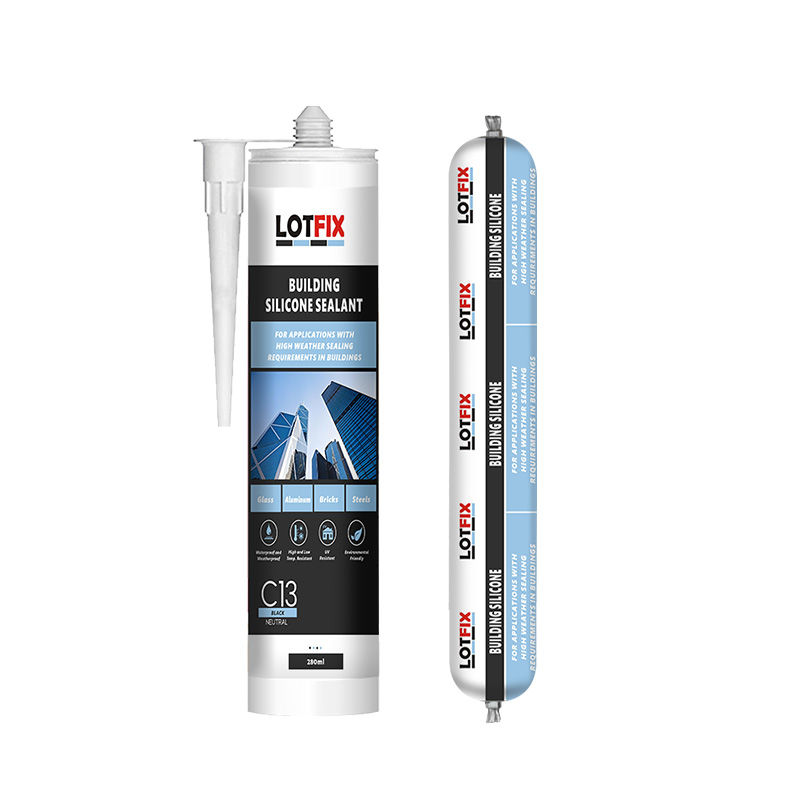
For metal gutters and flashings, neutral cure silicone is commonly preferred because it is more compatible with many metals than unsuitable acidic sealants. This matters when sealing galvanized steel, aluminum, coated metal, roof panels, gutter sections, and flashing details.
Buyers should also consider appearance and color. Clear, white, gray, black, or customized color options may be required depending on the gutter system, roof panel, wall surface, or local market preference. However, color should not replace technical performance as the main selection factor.
Roof and gutter sealant is designed for exterior waterproofing and movement, while ordinary sealant may only be suitable for basic indoor or low-exposure gaps. This difference is important for buyers who need reliable performance in roofing, drainage, and facade edge applications.
| Comparison Item | Roof & Gutter Sealant | Ordinary Sealant |
|---|---|---|
| Main Use | Exterior gutters, flashings, down pipes, roof joints, drainage seams, and weatherproofing details. | General gaps, indoor joints, light sealing, or non-critical applications. |
| Weather Exposure | Designed to resist rain, UV, heat, cold, and outdoor aging. | May not provide enough long-term resistance outdoors. |
| Movement Handling | Flexible enough for metal expansion, contraction, and joint movement. | May crack, shrink, or detach when exposed to repeated movement. |
| Substrate Compatibility | Suitable for many metal and exterior construction surfaces when properly applied. | Compatibility may be limited, especially on metal or coated roofing materials. |
| Buyer Direction | Better choice for roof drainage, flashing repair, gutter seams, and exterior waterproofing. | Use only where exposure and performance requirements are low. |
For professional buyers, the difference is not just product name. A suitable roof and gutter sealant should support real jobsite conditions, including rough edges, vertical and overhead application, difficult corners, moisture exposure, and temperature changes.
If the application involves constant water immersion, severe corrosion, damaged metal, poor drainage design, or loose roofing components, sealant alone may not be enough. Mechanical repair, replacement parts, improved drainage, or flashing correction may be required before sealing.
Buyers should choose sealant for gutters, flashings, and down pipes based on substrate, exposure level, movement demand, packaging needs, and market positioning. A low-cost general-purpose product may create higher repair costs if it fails too early.
For contractors: focus on adhesion, weather resistance, curing behavior, and ease of application on site.
For distributors: consider common colors, cartridge packaging, shelf life, stable supply, and product positioning for roofing customers.
For project buyers: check technical data, compatibility guidance, substrate requirements, and expected service conditions.
For private label buyers: evaluate formulation stability, packaging design, labeling, carton options, and repeat-order consistency.
Buyer Reminder:
Do not choose sealant only because it says “waterproof.” For gutters, flashings, and down pipes, the product should also be suitable for exterior exposure, metal bonding, joint movement, and long-term weathering.
Before full application, surfaces should be cleaned and prepared properly. Loose rust, old sealant, dust, grease, and standing water can weaken adhesion. When sealing gutters or down pipes, the sealant should be applied continuously around the joint and tooled to create good contact and water-shedding shape.
If you are selecting sealant for gutters, flashings, down pipes, roof drainage systems, exterior waterproofing, or other construction applications, LOTFIX can help you review suitable options based on substrate, application area, packaging demand, target market, and project requirements.
LOTFIX supplies sealant and adhesive products for construction and industrial use, supporting buyers who need stable quality, practical product recommendations, and reliable supply for different market needs. You can also visit the LOTFIX homepage here: https://www.lotfixsealant.com/.
Have other questions about roof and gutter sealant selection?
Contact LOTFIX for product information, sample discussion, or application matching support.
Contact LOTFIX