Mobile / WhatsApp
E-mail
Gap sealing is a fundamental part of building installation and maintenance work. Whether installing windows, sealing pipe penetrations, or finishing façade joints, selecting the correct material can influence insulation performance, structural durability, and long-term maintenance requirements.
Several different materials are commonly used for this purpose. Each one has unique characteristics that make it suitable for specific applications.
• Cement mortar or cement fillers
• Silicone sealants
• Acrylic sealants
• Polyurethane foam (PU foam) sealants
Traditional materials such as cement fillers and silicone sealants have been used for decades. Newer materials like polyurethane foam have expanded the range of sealing solutions available to installers, especially for modern buildings where energy efficiency and airtightness are important.
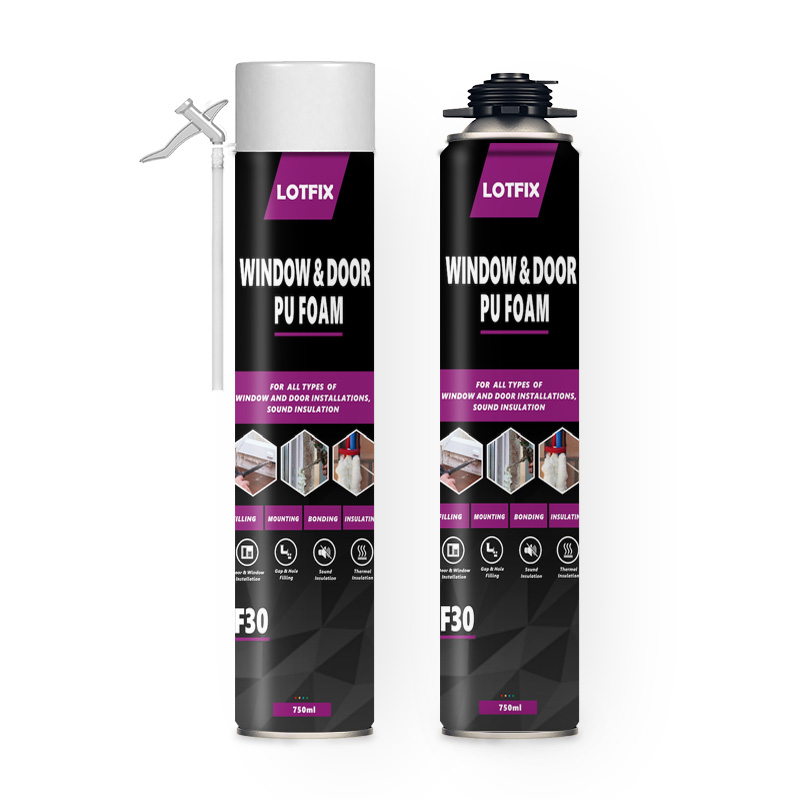
PU foam sealants are designed to expand after application, allowing them to fill irregular cavities and hard-to-reach gaps. Once cured, the foam forms a lightweight but stable structure that can provide both sealing and insulation benefits.
This expanding behavior is one of the key reasons polyurethane foam has become widely used in modern building installation work.
• Expands to fill irregular or deep gaps
• Provides effective air sealing
• Adds thermal insulation performance
• Reduces installation time in many applications
Because the foam expands and bonds to surrounding materials, it can seal areas where rigid fillers might leave small air gaps. This makes it particularly useful in areas such as window frame installations or wall penetrations.
Traditional sealants such as silicone or acrylic products remain essential in construction. They provide flexibility and finishing quality that expanding foam alone cannot always deliver.
Silicone sealants, for example, are widely recognized for their durability and weather resistance. They are commonly used in visible joints where long-term flexibility and appearance are important.
• High elasticity for joints that move over time
• Excellent resistance to UV exposure and weather
• Smooth surface finish for visible joints
• Reliable long-term sealing performance
Cement-based fillers also remain useful for certain structural applications where rigid support is required, particularly in masonry repairs or larger wall gaps.
Although PU foam and traditional sealants may both be used for gap filling, their performance characteristics are quite different.
PU foam is primarily designed for filling cavities and improving airtightness, while traditional sealants are usually applied at the surface level to provide flexible finishing and weather protection.
• PU foam works well for deep or hidden cavities.
• Silicone sealants perform better for visible joints and flexible gaps.
• Acrylic sealants are often used for interior finishing.
• Cement fillers are suitable for rigid structural repairs.
In practical construction work, installers rarely rely on a single material. Instead, different sealing materials are often combined to achieve both structural sealing and exterior finishing.
The choice of sealing material often depends on the specific stage of the installation process.
For example, during window installation, PU foam is frequently used to fill the internal cavity between the window frame and the wall. This provides insulation and airtightness inside the joint.
After the cavity is sealed, a silicone sealant may then be applied on the exterior joint to create a flexible waterproof finishing layer.
Interior cavity sealing → PU foam
Exterior joint finishing → silicone sealant
This layered approach allows each material to perform the role it is best suited for.
Professional installers usually select sealing materials based on several practical considerations.
These include gap depth, required flexibility, weather exposure, and whether the joint will remain visible after installation.
• Use PU foam for deep cavities and insulation gaps.
• Use silicone sealant for exterior joints and flexible connections.
• Use acrylic sealant for interior finishing.
• Use cement fillers for rigid structural repairs.
By understanding the strengths of each material, builders can create sealing systems that combine durability, insulation performance, and long-term reliability.