Mobile / WhatsApp
E-mail
Table of Contents
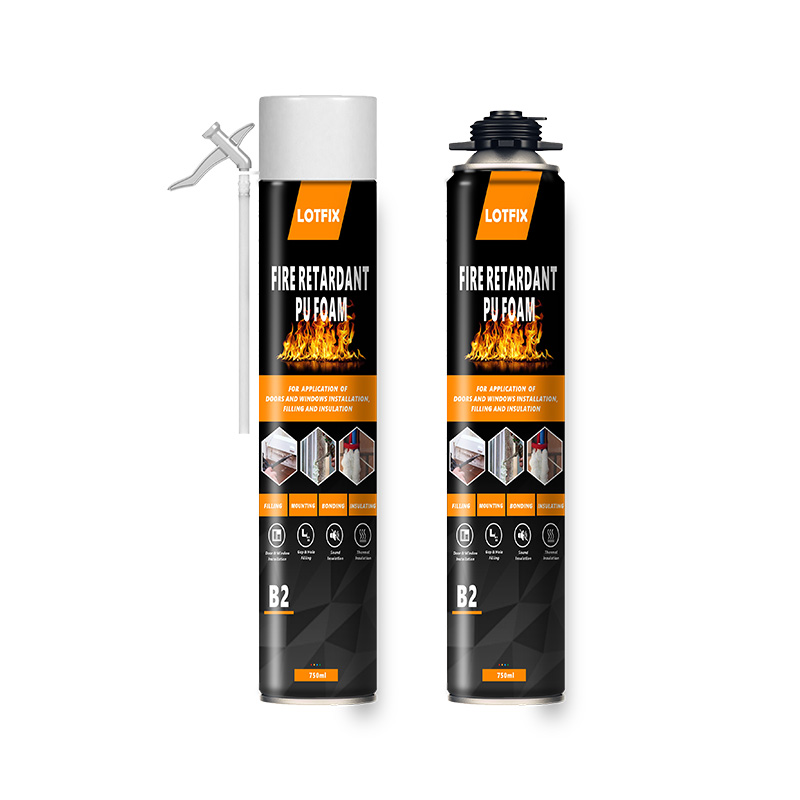
Polyurethane foam can help provide sound insulation because it expands into gaps, seals air leakage paths, reduces vibration around joints, and fills irregular spaces where noise can pass through.
In building projects, noise does not only travel through walls, doors, windows, pipes, and panels. It also passes through small gaps around frames, service penetrations, wall joints, roof details, and poorly sealed cavities. PU foam is useful in these areas because it can expand after application and fill spaces that are difficult to seal with rigid materials.
Polyurethane foam provides sound insulation mainly by sealing gaps and reducing air movement. Airborne sound often enters through small cracks, joints, and openings. When PU foam expands and fills these spaces, it helps reduce sound leakage through the building envelope or interior partition.
The foam structure also helps absorb part of the sound energy inside the filled cavity. This does not mean PU foam can replace professional acoustic systems, but it can improve the sealing performance of doors, windows, wall joints, pipe gaps, and other weak points where noise commonly leaks.
The practical value of PU foam in sound insulation is gap sealing. It works best when noise problems are caused by air leakage, cavities, joints, and small construction openings.
The five major advantages of polyurethane foam for sound insulation are gap filling, air sealing, irregular-surface coverage, thermal support, and easy jobsite application. These advantages make PU foam useful for construction details where traditional board or strip materials are hard to apply neatly.
PU foam expands into frame gaps, wall joints, pipe openings, and irregular cavities, reducing the empty spaces where sound can pass.
Many noise problems are linked to air paths. By sealing gaps, PU foam helps reduce sound transmission through cracks and openings.
Around pipes, cable holes, window frames, door frames, and roof details, foam can cover shapes that are difficult to seal with rigid strips.
PU foam can help reduce both sound leakage and heat loss in the same gap, which is useful for windows, doors, wall edges, and service openings.
Compared with cutting many small filling materials, PU foam is easier to apply in narrow gaps, repair areas, and local construction details.
PU foam works well for reducing noise leakage through small construction gaps. It is most useful when the sound problem is related to air paths, frame gaps, pipe penetrations, hollow joints, or poorly sealed cavities.
| Application Area | What PU Foam Helps With | Practical Reminder |
|---|---|---|
| Door frame gaps | Fills the gap between the frame and wall opening, reducing air and sound leakage. | Use controlled expansion to avoid frame deformation. |
| Window gaps | Seals irregular spaces around window frames and helps improve installation tightness. | Finish with sealant or trim protection where required. |
| Pipe and cable penetrations | Fills small openings around services that can transmit noise between rooms or floors. | Check fire, waterproofing, and project requirements before use. |
| Wall and ceiling joints | Reduces gaps around edges and cavities where sound can pass. | Do not rely on foam alone for full acoustic-rated wall systems. |
In real projects, PU foam is often used as part of a sealing detail rather than as the only acoustic material. It improves weak points, especially where air leakage and small cavities reduce the performance of walls, doors, windows, or service openings.
PU foam does not replace professional acoustic boards, mineral wool systems, acoustic sealants, floating floors, resilient channels, or mass-loaded sound barriers. It can reduce noise leakage through gaps, but it cannot solve every sound transmission problem by itself.
It does not add much mass: heavy materials are often needed to block strong airborne noise.
It does not replace acoustic design: walls, floors, and ceilings still need proper structure and layers.
It does not stop all vibration noise: impact noise and structural vibration need different control methods.
It does not replace fire-rated systems: penetrations may require approved firestop materials, depending on the project.
It needs finishing protection: exposed foam may require sealant, coating, trim, plaster, or other protection.
Buyers should treat PU foam as a gap-filling and sealing material with sound-reducing benefits, not as a complete acoustic insulation system. This distinction helps avoid wrong expectations and reduces project complaints.
Sound insulation and thermal insulation are related in some applications, but they are not the same. Thermal insulation focuses on reducing heat transfer, while sound insulation focuses on reducing sound transmission. PU foam can support both in gaps, but the working logic is different.
| Comparison | Sound Insulation | Thermal Insulation |
|---|---|---|
| Main purpose | Reduce noise transmission through gaps, joints, cavities, and surfaces. | Reduce heat loss or heat gain through gaps and building envelopes. |
| PU foam contribution | Seals air paths and fills cavities that can leak sound. | Fills gaps and reduces air leakage that affects energy efficiency. |
| Typical weak point | Door frames, window gaps, pipe holes, wall joints, ceiling edges. | Window gaps, roof edges, wall gaps, pipe openings, insulation joints. |
| Buyer reminder | Do not expect foam alone to replace a full acoustic wall or floor system. | Choose foam based on expansion, adhesion, insulation need, and jobsite condition. |
In short, PU foam can improve both sound and thermal performance by sealing gaps. But if a project has strict acoustic requirements, the foam should be combined with suitable acoustic materials, correct wall or frame design, and proper finishing details.
PU foam fits best in real construction projects where small gaps, irregular cavities, and air leakage paths need fast filling and sealing. It is especially useful around doors, windows, pipes, HVAC gaps, roof joints, insulation board edges, and renovation details.
Residential buildings: filling around window and door frames to reduce drafts, noise leakage, and heat loss.
Commercial spaces: sealing gaps around partition walls, service penetrations, and renovation joints.
Mechanical and pipe areas: filling irregular gaps around pipes, ducts, cable openings, and equipment details.
Roof and wall details: sealing local joints where air leakage affects comfort and insulation performance.
Repair work: quick filling of small cavities and gaps where rigid insulation materials are inconvenient.
Before choosing PU foam for sound-related applications, buyers should confirm the gap size, substrate, expansion requirement, finishing method, fire requirement, and whether the project needs a full acoustic system. This helps match the product to the real use instead of expecting one material to solve every noise problem.
LOTFIX provides PU foam, silicone sealant, acrylic sealant, adhesive, and related construction material solutions for sealing, filling, bonding, insulation, and installation applications. If you are comparing PU foam products for door and window gaps, pipe openings, wall joints, insulation areas, or general construction filling work, you can visit the LOTFIX homepage to learn more about available product categories.
If you have questions about product selection, application scenarios, or cooperation requirements, please Contact Us.