Mobile / WhatsApp
E-mail
Mirror silicone sealant is used for decorative mirror installation where safe bonding, stable adhesion, and mirror backing compatibility are important. Unlike ordinary sealing around glass or tiles, mirror installation requires more care because the back coating, silver layer, paint layer, and edge area can be sensitive to unsuitable chemicals.
For project buyers, installers, and distributors, the key is not just whether the sealant can bond. The sealant should also be suitable for mirror backing, reduce the risk of corrosion or staining, and match the installation environment such as bathrooms, hotels, wardrobes, retail interiors, and decorative wall systems.
Mirrors are different from ordinary glass. A decorative mirror normally has a reflective backing layer and protective coating on the rear side. If the wrong sealant is used, chemicals released during curing may attack the backing layer, cause dark spots, create staining, weaken adhesion, or damage the mirror over time.
A suitable mirror silicone sealant should be compatible with mirror backing and should not be replaced by a random acidic or general-purpose sealant without testing.
| Mirror Installation Risk | Why Dedicated Sealant Matters |
|---|---|
| Backing corrosion | Unsuitable sealant may damage the reflective layer or protective coating behind the mirror. |
| Staining and dark marks | Incorrect formulas may create visible marks after installation, especially on decorative mirrors. |
| Poor adhesion | Mirror backing, wall surface, humidity, and installation method all affect bonding performance. |
| Moisture damage | In bathrooms and wet interiors, edge protection and correct sealing help reduce moisture-related problems. |
Mirror silicone sealant is commonly used in interior decoration, bathroom installation, furniture production, hotel renovation, commercial fit-out, and residential projects. It is especially useful when decorative mirrors need to be fixed, sealed, or protected in areas where appearance and long-term stability matter.
Used for mirror fixing and edge protection in humid spaces such as bathrooms, washrooms, and vanity areas.
Suitable for decorative mirror walls, room interiors, wardrobe mirrors, and renovation projects.
Used in cabinets, wardrobes, dressing tables, display furniture, and decorative panels.
Applied in shops, salons, gyms, restaurants, and showroom spaces where mirrors are part of the visual design.
Mirror installation may involve two different tasks: edge sealing and back bonding. These two applications are related, but they are not the same. Buyers and installers should confirm which function the sealant is expected to perform before selecting a product.
| Application | Main Purpose | Buyer Note |
|---|---|---|
| Mirror edge sealing | Seals the visible edge area to reduce moisture entry and improve finishing appearance. | Important for bathrooms, vanity mirrors, and humid interior spaces. |
| Mirror back bonding | Bonds the mirror back to wall, board, panel, cabinet, or other installation surface. | Requires mirror backing compatibility and suitable adhesion to the mounting surface. |
| Perimeter finishing | Creates a clean line around the mirror after installation. | Color, tooling quality, and neat application affect final appearance. |
Important: if the sealant will contact the mirror backing directly, do not select a general-purpose acidic silicone without confirming mirror compatibility.
Many mirror installation problems are not caused by the mirror itself, but by wrong sealant choice, poor surface preparation, or unsuitable application methods. These mistakes can lead to staining, weak bonding, trapped moisture, uneven installation, or early failure.
Ordinary acidic silicone may not be suitable for mirror backing and can increase the risk of corrosion or staining.
Dust, oil, moisture, paint residue, or weak wall surfaces can reduce bonding strength and installation stability.
Poor bead layout, excessive sealant, or insufficient support during curing can affect the final installation result.
For new mirrors, coated backs, or unfamiliar boards, sample testing helps reduce project and purchasing risk.
Before ordering mirror silicone sealant, buyers should confirm:
• Whether the sealant will be used for mirror edge sealing, back bonding, or perimeter finishing
• Whether the formula is suitable for mirror backing and decorative mirror applications
• The mounting surface: wall, tile, board, metal, cabinet, glass, or coated panel
• Indoor environment: bathroom, hotel, furniture, retail interior, or general decoration
• Required color, cartridge size, carton quantity, shelf life, and label language
• Whether OEM packaging, private label, or market-specific packaging is needed
• Whether samples are required for adhesion and compatibility testing before bulk purchase
For decorative mirror installation, the safest buying method is to describe the mirror type, installation surface, and application method first. This helps avoid selecting a sealant that performs well on ordinary glass but is not suitable for mirror backing or long-term interior decoration use.
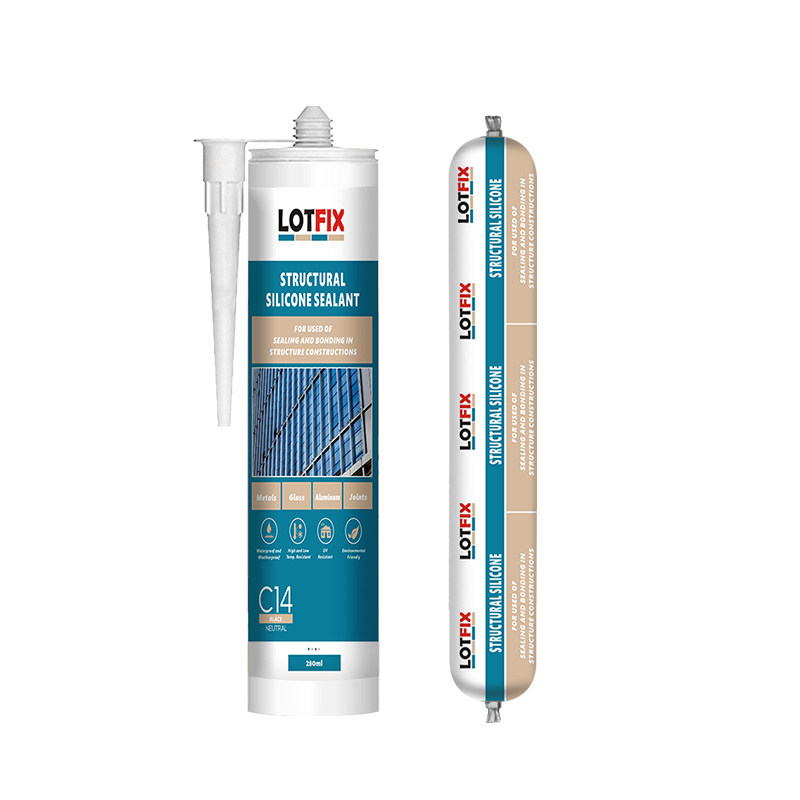
LOTFIX provides silicone sealant and related sealing products for construction, decoration, distribution, and project applications. If you are comparing mirror silicone sealant, neutral silicone sealant, sanitary silicone sealant, acetic silicone sealant, PU foam, or other sealing solutions, you can visit the LOTFIX homepage to learn more about available product options.
For product selection, sample requests, packaging details, or OEM cooperation, please contact us and share your application requirements.
Visit LOTFIX Homepage Contact LOTFIX