Mobile / WhatsApp
E-mail
Table of Contents
Spray foam is widely used in insulation projects because it can be applied directly onto surfaces that are difficult to cover with rigid boards, blankets, or pre-formed insulation shells. For roofs, pipes, tanks, and other irregular structures, the foam expands after spraying and forms a continuous insulation layer over curves, joints, edges, and surface transitions.
In real jobsite conditions, insulation work is rarely limited to flat and simple surfaces. Contractors may need to handle metal roofs, curved tanks, pipe elbows, equipment housings, wall-to-roof joints, and narrow spaces around supports or brackets. Spray foam can help reduce gaps and improve coverage efficiency, but its final result still depends on surface preparation, spraying method, foam type, weather conditions, and protective finishing.
Spray foam fits irregular insulation surfaces because it is applied as liquid foam and then expands to fill small gaps, seams, curves, and uneven areas. This makes it more flexible for complex structures compared with insulation materials that need cutting, shaping, or mechanical fixing before installation.
Spray foam can form a continuous insulation layer over corners, joints, and transitions, helping reduce weak points caused by cutting or patching separate insulation pieces.
Round tanks, pipes, elbows, and curved metal surfaces are often difficult to cover neatly with rigid materials. Spray foam adapts more easily to these shapes.
The expansion behavior helps fill small spaces around seams, brackets, penetrations, and surface gaps, which can improve insulation continuity when applied correctly.
This is why spray foam is often selected for insulation areas where shape complexity matters. Instead of forcing workers to cut many small insulation pieces, spraying allows them to build a layer directly on the surface and adjust coverage according to the actual site condition.
Spray foam is commonly used in project areas that require thermal insulation, gap filling, condensation control, or improved coverage on irregular surfaces. The exact application should be selected according to the project environment, substrate, temperature range, and protection requirements.
| Project Area | Typical Use | Practical Value |
|---|---|---|
| Roof insulation | Applied on roof decks, metal roofs, roof joints, and hard-to-cover roof details. | Helps create a continuous insulation layer and reduce gaps around edges and transitions. |
| Pipe insulation | Used around straight pipes, elbows, pipe connections, and areas where pre-formed insulation is difficult to fit. | Improves coverage around curves and supports while reducing cutting and patching work. |
| Tank insulation | Sprayed onto storage tanks, water tanks, equipment tanks, and other rounded surfaces. | Adapts to curved tank walls and helps form a fitted insulation layer. |
| Equipment surfaces | Used on equipment housings, machinery covers, service areas, or local repair zones. | Useful for small or irregular insulation areas where standard insulation pieces are not convenient. |
For buyers, the main point is to match the foam product with the application area. Roof insulation may require weather protection and UV-resistant finishing. Pipe and tank insulation may need attention to temperature range, surface adhesion, mechanical protection, and long-term maintenance conditions.
Before spraying foam insulation, the surface, environment, and project requirements should be checked carefully. Spray foam can improve application efficiency, but it should not be used as a shortcut to cover unstable, dirty, wet, or unsuitable surfaces.
Surface cleanliness: remove dust, oil, loose rust, release agents, and unstable coatings before spraying.
Surface dryness: excessive moisture can affect adhesion, curing, and foam structure.
Substrate condition: weak paint, loose concrete, corroded metal, or peeling layers should be repaired first.
Ambient temperature: low or high temperatures may affect foam expansion, curing speed, and final quality.
Ventilation and safety: spraying should be done with proper ventilation, protection, and trained application handling.
Final protection: exposed foam may require coating, covering, or mechanical protection depending on the project environment.
These checks are important because spray foam insulation is a system-based application. The foam product, surface condition, spraying thickness, curing environment, and protective layer all influence the final insulation performance.
In practical insulation work, spray foam should be applied in controlled layers instead of one uncontrolled thick pass. This helps improve foam structure, adhesion, curing stability, and surface uniformity.
The goal is not simply to spray more foam, but to build a stable and continuous insulation layer with proper thickness, good adhesion, and suitable protection for the working environment.
Prepare the surface: clean and repair the substrate before application.
Protect surrounding areas: cover windows, equipment, finished surfaces, valves, nameplates, and areas that should not receive foam.
Spray in sections: work area by area to keep thickness and coverage easier to control.
Build thickness gradually: apply multiple controlled passes when required instead of relying on one heavy layer.
Inspect gaps and joints: check edges, overlaps, pipe supports, tank bases, and roof transitions after spraying.
Add finishing protection: use coating, covering, cladding, or other protection if the foam will be exposed to weather, sunlight, impact, or moisture.
For roofs, attention should be paid to drainage, edge details, and protective coating. For pipes, installers should check elbows, supports, and connection points. For tanks, surface preparation and finishing protection are especially important because curved surfaces and outdoor exposure may increase application difficulty.
Buyers should understand that spray foam is useful for many insulation applications, but it is not suitable for every project condition. It requires correct product selection, proper application, and suitable finishing protection to perform well over time.
| Limitation | What It Means for Buyers |
|---|---|
| Application skill matters | Poor spraying technique can lead to uneven thickness, weak adhesion, voids, or wasted material. |
| Surface preparation is still required | Foam cannot solve problems caused by loose, dirty, oily, wet, or unstable surfaces. |
| Outdoor exposure needs protection | Exposed foam may need coating, covering, or cladding for UV, weather, and mechanical protection. |
| Not all temperatures are suitable | Project temperature range should be checked before using foam on pipes, tanks, or equipment surfaces. |
| Fire and building requirements vary | Some projects may require specific fire ratings, coverings, coatings, or compliance with local building rules. |
Spray foam should be treated as a practical insulation material rather than a universal solution. When used in the right project area with correct surface preparation and finishing protection, it can help improve insulation continuity, reduce installation complexity, and make irregular surfaces easier to handle.
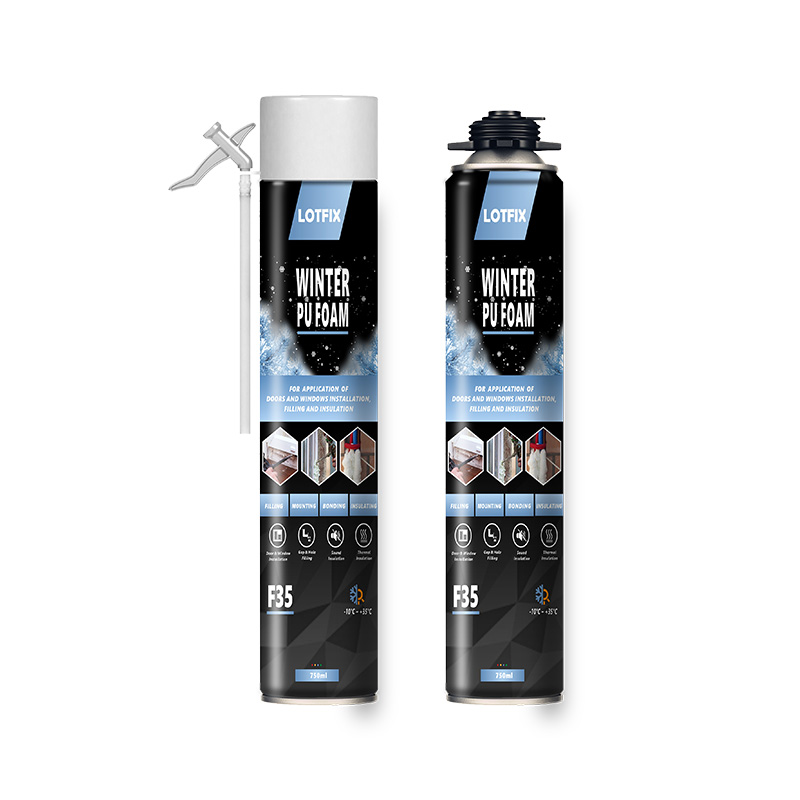
LOTFIX provides PU foam, sealant, adhesive, and related construction material solutions for insulation, filling, sealing, bonding, and installation applications. If you are comparing spray foam products for roof, pipe, tank, or general construction insulation projects, you can visit the LOTFIX homepage to learn more about available product categories.
If you have questions about product selection, application scenarios, or cooperation requirements, please Contact Us.