Mobile / WhatsApp
E-mail
Table of Contents
MS hybrid sealant is a one-component, moisture-curing modified silane sealant that combines strong adhesion, flexibility, weather resistance, and paintability.
It is often called MS polymer sealant or modified silane sealant. Unlike ordinary silicone or polyurethane products, MS hybrid sealant is designed to balance bonding strength, elastic sealing, low odor, low VOC, and broad substrate compatibility. This makes it useful for construction joints, windows and doors, facades, interior finishing, industrial assembly, and applications where both sealing and bonding are required.
MS hybrid sealant is a sealant based on modified silane polymer technology. It cures by reacting with moisture in the air and forms an elastic, durable sealing material after curing. Its main value is that it combines silicone-like flexibility with polyurethane-like adhesion in one product direction.
Simple answer: MS hybrid sealant is a versatile construction sealant for projects that need strong bonding, elastic sealing, paintability, weather resistance, and low-odor application.
It should not be understood as a simple “middle option” between silicone and polyurethane. In many projects, MS hybrid sealant is selected because it solves common limitations of traditional sealants: silicone is often not paintable, while polyurethane may have stronger odor, higher chemical sensitivity, or weaker weathering performance depending on the formula.
The key features of MS hybrid sealant include primerless adhesion, paintability, elastic movement capability, weather resistance, low odor, low VOC, and good compatibility with many common construction substrates.
Many MS hybrid sealants can bond to concrete, wood, metal, glass, PVC, stone, tile, and painted surfaces without primer, depending on surface condition and product grade.
After curing, many MS hybrid sealants can be painted with water-based or acrylic coatings, making them suitable for visible joints and decorative finishes.
MS hybrid sealant remains elastic after curing and can handle joint movement in many construction and industrial applications.
Many MS hybrid products are solvent-free, isocyanate-free, and low odor, making them practical for indoor, renovation, and hygiene-sensitive environments.
Exterior-grade MS hybrid sealants can resist weathering, UV exposure, rain, and temperature changes when used within the product specification.
MS hybrid sealants usually show low shrinkage after curing, helping maintain a cleaner bead shape and more stable joint appearance.
These features make MS hybrid sealant attractive when a project needs more than simple gap filling. It is often used where sealing, bonding, appearance, and application comfort all matter at the same time.
The main benefits of MS hybrid sealant are strong adhesion, paintability, low odor, good weather resistance, flexible curing, and better environmental profile compared with many traditional sealant types.
| Benefit | What It Means | Why It Matters |
|---|---|---|
| Wide substrate bonding | Bonds to many porous and non-porous surfaces. | Useful for construction sites with mixed materials. |
| Paintable finish | Can often be painted after curing. | Better for visible joints, trims, facades, and decorative areas. |
| Moisture-curing system | Cures by reacting with air moisture. | Suitable for one-component cartridge or sausage packaging. |
| Good application experience | Low odor, low VOC, and often easier indoor use. | Better for renovation, interior work, and occupied spaces. |
| Low shrinkage and durable bead | Keeps a stable joint after curing. | Helps reduce cracking, gaps, or poor appearance in visible seams. |
Typical values such as skin-over time, curing depth, service temperature, and movement capability vary by formula. Some MS hybrid sealants may skin over in around 20 to 30 minutes and cure by millimeters per day, but buyers should always confirm exact data from the product technical data sheet.
Compared with silicone sealant, MS hybrid sealant is usually more paintable and has stronger adhesion to mixed substrates. Compared with polyurethane sealant, MS hybrid sealant is often lower odor, isocyanate-free, and better in weather resistance depending on the formula.
| Comparison | MS Hybrid Sealant | Silicone Sealant | Polyurethane Sealant |
|---|---|---|---|
| Adhesion | Strong on many construction substrates. | Strong on glass, ceramic, and selected non-porous surfaces. | Strong bonding and mechanical strength. |
| Paintability | Often paintable after curing. | Usually not paintable. | Often paintable after curing. |
| Weather resistance | Good for many exterior construction uses. | Excellent UV and long-term weather stability in many grades. | Varies by formula; may need coating or protection in some exterior conditions. |
| Odor and safety profile | Often low odor, solvent-free, and isocyanate-free. | Acid cure types may have vinegar-like odor; neutral cure types vary by chemistry. | May contain isocyanate-related chemistry depending on formula. |
| Best use direction | Balanced sealing and bonding on mixed substrates. | Wet areas, glass, sanitary joints, high UV, and high flexibility. | Heavy-duty bonding, concrete joints, industrial floors, and abrasion areas. |
MS hybrid sealant is not automatically better than silicone or polyurethane in every situation. Silicone remains strong in high-UV, high-movement, and sanitary wet areas. Polyurethane remains useful where abrasion resistance and heavy-duty bonding are the main requirements. MS hybrid is strongest when the project needs a balanced combination of adhesion, paintability, flexibility, and low odor.
MS hybrid sealant is used in building construction, windows and doors, facade joints, flooring, sanitary areas, industrial assembly, vehicle manufacturing, marine sealing, container sealing, and hygiene-sensitive spaces where low odor and low emissions are important.
Used for exterior wall joints, curtain wall areas, panel joints, and facade gaps where adhesion and weather resistance are required.
Suitable for frame-to-wall joints, perimeter sealing, and mixed substrate connections around windows and doors.
Selected for joints that need elastic movement, adhesion, and better mechanical durability than simple decorative caulk.
Can be used in selected wet-area joints when the product is designed for moisture exposure and mildew resistance.
Used in vehicle, ship, container, and equipment sealing where bonding, vibration resistance, and durability are important.
Suitable for projects that require low odor, low emission, and better indoor air comfort, depending on certification and formula.
For food processing, pharmaceutical, cleanroom, or medical-related environments, buyers should not rely on the product name alone. They should check certifications, emissions data, and project-specific compliance requirements before selection.
To choose the right MS hybrid sealant, match the product to the substrate, movement requirement, bonding strength, paintability, transparency, curing speed, service temperature, and certification needs. Different projects require different MS hybrid grades.
| Project Requirement | Recommended Product Direction | What to Confirm |
|---|---|---|
| Curtain wall or expansion joint | Low-modulus, high-elasticity MS hybrid sealant | Movement capability, UV resistance, weathering data, and joint design. |
| Bonding and sealing in one step | High-strength MS hybrid adhesive sealant | Tensile strength, shear strength, substrate compatibility, and curing speed. |
| Visible decorative joint | Paintable or color-matched MS hybrid sealant | Coating compatibility, shrinkage, surface finish, and color stability. |
| Transparent appearance | Transparent-grade MS hybrid sealant | Clarity, yellowing resistance, adhesion, and suitable substrate range. |
| Food, medical, or cleanroom-related use | Certified low-emission or special-grade MS hybrid sealant | Project-required certifications, emissions report, SDS, and compliance data. |
Before purchasing, check the technical data sheet carefully. Key items include movement capability, skin-over time, curing depth, tensile strength, elongation, hardness, application temperature, service temperature, paintability, primer requirement, and storage life. These details decide whether the product can meet the real project condition.
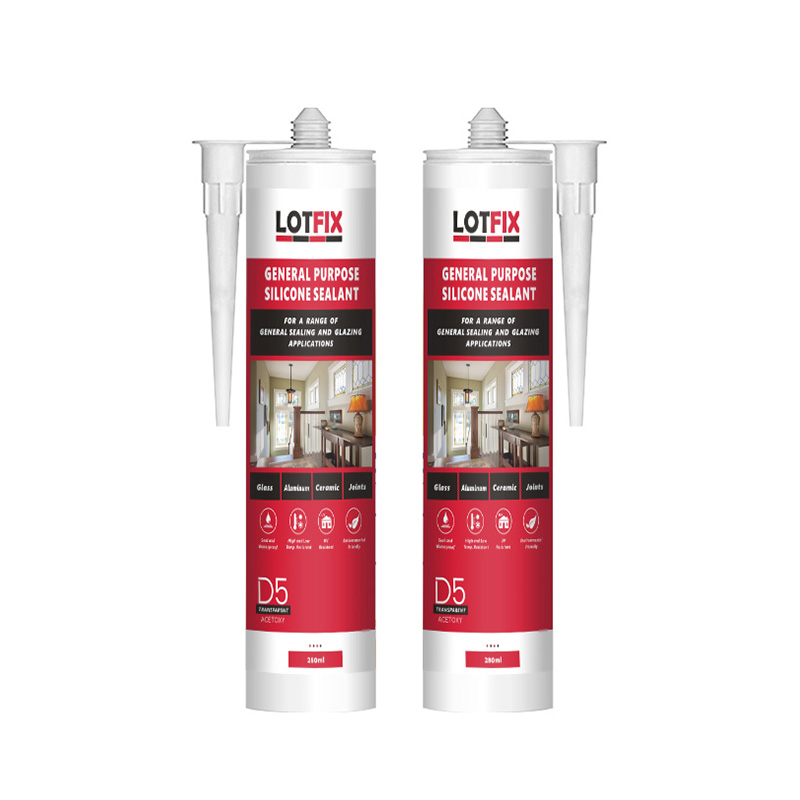
LOTFIX provides silicone sealant, acrylic sealant, PU foam, adhesive, MS hybrid sealant, and related construction material solutions for sealing, filling, bonding, insulation, and installation applications. If you are comparing products for facades, windows, doors, flooring, bathrooms, kitchens, industrial assembly, or low-odor indoor use, you can visit the LOTFIX homepage to learn more about available product categories.
If you have questions about product selection, technical data, application scenarios, or cooperation requirements, please Contact Us.