Mobile / WhatsApp
E-mail
Table of Contents
The best windshield sealant for structural windshield installation is usually a dedicated polyurethane windshield adhesive, not ordinary silicone sealant.
A windshield is not only a piece of glass that keeps out wind and rain. In many vehicles, it is also part of the body structure and safety system. That is why windshield bonding needs a verified automotive-grade PU adhesive with proper adhesion, elasticity, curing performance, and safe drive-away guidance. Silicone may be useful for selected non-structural leak repair or edge sealing cases, but it should not be used as the main structural windshield glue.
For windshield replacement and structural glass bonding, the best product direction is a dedicated polyurethane windshield adhesive. It is commonly called windshield glue, windscreen sealant, PU windshield adhesive, windshield polyurethane, or automotive glass adhesive.
Simple rule: use polyurethane windshield adhesive for structural windshield bonding. Use silicone only for clearly non-structural sealing or small leak repair when the product and repair method allow it.
This distinction matters because the windshield adhesive must do more than stop water. It must bond glass to the vehicle body, remain flexible under vibration and temperature changes, resist weather and moisture, and keep the glass securely positioned after curing. Ordinary construction silicone or bathroom silicone does not replace a tested automotive windshield adhesive.
Windshield sealing means blocking water, air, dust, and noise around the glass edge. Structural bonding means fixing the windshield to the vehicle body as part of a safety-related glass installation system. These two jobs are not the same.
| Item | Windshield Sealing | Structural Windshield Bonding |
|---|---|---|
| Main purpose | Stops small leaks, air gaps, dust, or edge moisture. | Bonds the windshield glass to the vehicle frame. |
| Typical material | Compatible sealant for non-structural repair. | Automotive-grade polyurethane windshield adhesive. |
| Safety role | Mainly weather and leakage control. | Safety-related bonding performance and vehicle glass retention. |
| Can silicone be used? | Sometimes, for small non-structural leak sealing if compatible. | No. Ordinary silicone should not be used as structural windshield glue. |
If the windshield is being installed, replaced, or bonded to the body frame, treat it as structural bonding. If the glass is already installed correctly and there is only a small edge leak, it may be a sealing repair, but the repair method still needs to be compatible with the original adhesive system.
Polyurethane is better for windshield structural bonding because it is designed to provide strong adhesion, elastic bonding, and automotive glass installation performance. Silicone is mainly suitable for non-structural sealing and should not be used as windshield installation glue.
| Comparison Point | Polyurethane Windshield Adhesive | Silicone Sealant |
|---|---|---|
| Structural bonding | Designed for windshield glass bonding when the correct product and process are used. | Not suitable as a structural windshield installation adhesive. |
| Elasticity | Flexible enough to handle vibration, expansion, and body movement. | Flexible, but not designed for structural windshield load requirements. |
| Water sealing | Provides bonding and sealing together when applied correctly. | Can provide non-structural sealing in selected leak repair cases. |
| Repair use | Preferred for windshield replacement and automotive glass bonding. | Only for clearly non-structural sealing, not for mounting the glass. |
| Selection basis | TDS, SDAT, primer system, OEM repair requirements, and adhesive performance. | Compatibility, weather resistance, leak location, and non-structural use only. |
In other words, silicone is not “bad”; it is simply the wrong product for structural windshield installation. It can seal, but it should not replace polyurethane windshield adhesive where the glass must be bonded to the vehicle body.
Polyurethane windshield adhesive is used because it can combine strong bonding, elasticity, moisture-curing performance, and durable sealing in one material. These properties are important for automotive glass replacement and direct glazing.
PU windshield adhesive is formulated to bond automotive glass to coated vehicle frames when the surface and primer system are correct.
A windshield joint faces vibration, body movement, temperature changes, and road conditions, so the adhesive must not cure into a brittle line.
The same adhesive bead helps hold the windshield in place and seal against water, dust, and air leakage.
Dedicated PU windshield adhesives are made for direct glazing and automotive glass replacement, not just general household sealing.
For best results, the adhesive, primer, glass preparation, body preparation, bead shape, curing condition, and safe drive-away instruction must work together as a complete installation system.
Windshield glue dry time depends on the polyurethane formula, bead size, temperature, humidity, vehicle type, and required safe drive-away time. Tack-free time may be measured in minutes, but safe vehicle use depends on deeper cure and adhesive strength development.
| Time Term | What It Means | Why It Matters |
|---|---|---|
| Tack-free time | The adhesive surface no longer feels sticky. | Useful for handling, but not enough to judge vehicle safety. |
| Curing speed | How deep the adhesive cures over time. | Thick beads need more time than the surface indicates. |
| Safe Drive-Away Time | The minimum time before the vehicle may be safely driven after installation. | This is the key time for windshield replacement, not just dry-to-touch time. |
| Full cure | The adhesive reaches final strength and performance. | May take longer than the drive-away time and depends on conditions. |
This is why “how long does windshield glue take to dry” should not be answered with one number. The installer should confirm tack-free time, curing speed, and safe drive-away time from the specific adhesive data sheet.
Safe Drive-Away Time, often called SDAT, is the minimum waiting time before a vehicle can be driven after windshield installation. It is more important than surface dry time because it relates to the adhesive’s safety-related bonding performance.
SDAT is product-specific: different PU windshield adhesives can have different drive-away times.
Temperature matters: cold conditions can slow curing and may extend the safe waiting time.
Humidity matters: moisture-curing PU adhesive depends on suitable environmental conditions.
Vehicle and safety system matter: windshield bonding may affect body structure, airbag performance, and glass retention.
The TDS must be checked: do not assume SDAT from tack-free time or from another adhesive brand.
If a product page does not clearly show the safe drive-away time, buyers should request the official technical data sheet and application guidance before using it for windshield replacement. This is especially important for professional automotive glass service.
Windshield adhesive performance depends heavily on surface preparation. Even a good polyurethane windshield adhesive can fail if the glass, frame, old adhesive bead, or primer system is handled incorrectly.
Remove the old windshield safely: protect the vehicle body, interior, and surrounding components.
Trim old adhesive correctly: leave or remove old bead according to the adhesive system and repair procedure.
Clean the bonding surfaces: remove dust, oil, moisture, glass powder, rust, loose paint, and contamination.
Check primer requirements: some systems require glass primer, body primer, black primer, or activator; others may be primerless only under defined conditions.
Apply the PU adhesive bead: use the correct V-shaped or triangular bead profile and keep a continuous line with no gaps.
Install the glass within open time: position the windshield before the adhesive skins or loses wetting ability.
Respect curing and SDAT: do not release the vehicle for driving before the specified safe drive-away time.
For windshield installation, clean application is not just about appearance. It affects adhesion, water sealing, glass positioning, and long-term safety. Always follow the adhesive manufacturer’s procedure and the vehicle repair requirements.
Before purchasing windshield adhesive, buyers should check whether the product is a dedicated PU windshield adhesive, whether it has clear technical data, whether the primer system is defined, and whether the safe drive-away information is available.
| Check Item | Why It Matters | What to Ask For |
|---|---|---|
| Base technology | Windshield bonding normally requires PU adhesive, not general silicone. | Confirm polyurethane windshield adhesive. |
| TDS and SDS | Technical and safety data are essential for professional use. | Request official product data sheets. |
| Safe Drive-Away Time | This determines when the vehicle can be released after installation. | Ask for SDAT under defined temperature and humidity conditions. |
| Primer system | Incorrect primer use can weaken bonding. | Confirm glass primer, body primer, activator, and primerless conditions. |
| Application temperature | Cold or hot conditions affect extrusion, curing, and adhesion. | Check approved application range. |
| Packaging and shelf life | Expired or poorly stored PU adhesive may cure or extrude incorrectly. | Confirm cartridge, sausage, storage condition, and shelf life. |
For distributors and professional installers, the best windshield adhesive is not only the one with strong bonding claims. It is the one with clear product data, stable supply, practical packaging, defined application instructions, and technical support.
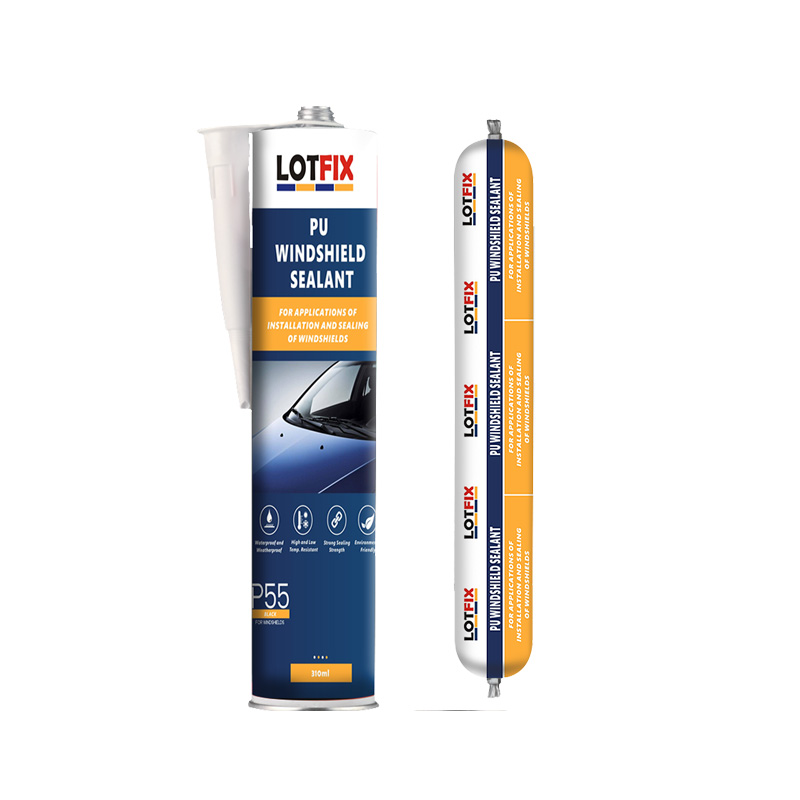
LOTFIX P55 PU Windshield Sealant is a one-component, moisture-curable polyurethane sealant positioned for windshield, side window, and back window glass bonding. It should be discussed as a PU windshield adhesive direction, not as ordinary silicone.
| Product Item | LOTFIX P55 Reference | Buying Reminder |
|---|---|---|
| Base technology | Polyurethane. | Suitable direction for windshield adhesive discussions. |
| Hardness | Shore A 60 points. | Check the TDS for complete mechanical performance. |
| Tack-free time | ≤ 25 minutes under standard conditions. | Tack-free time is not the same as Safe Drive-Away Time. |
| Curing speed | 3 mm/d under standard conditions. | Actual cure depends on temperature, humidity, and bead size. |
| Application temperature | +5°C to +35°C. | Do not apply outside recommended conditions without technical confirmation. |
| Packaging and color | 310 ml aluminum cartridge and 600 ml sausage; standard color black. | Choose packaging based on installer workflow and usage volume. |
The product page also describes P55 as non-sag, with excellent bonding and sealing performance, good extrudability and thixotropy, and suitability for windshield and side or back window glass bonding. For safety-critical windshield replacement, buyers should still request the full TDS, SDS, primer recommendations, safe drive-away information, and any required test or compliance documentation before use.
For windshield structural bonding, a dedicated polyurethane windshield adhesive is usually the best product direction.
Ordinary silicone should not be used as structural windshield glue. It may only be considered for non-structural sealing where compatible.
It is a moisture-curing PU adhesive used for bonding automotive glass to the vehicle body in windshield replacement and direct glazing.
Tack-free time may be measured in minutes, but safe drive-away time and full cure depend on the specific adhesive and conditions.
No. Tack-free time only describes the surface condition. Safe Drive-Away Time relates to when the vehicle may be released after installation.
Ask for TDS, SDS, SDAT, primer instructions, application temperature, curing speed, packaging, shelf life, and compatibility guidance.
The final selection rule is clear: choose PU windshield adhesive for structural automotive glass bonding, and do not replace it with ordinary silicone sealant.
LOTFIX provides silicone sealant, acrylic sealant, PU foam, adhesive, hybrid sealant, PU windshield sealant, and related construction material solutions for sealing, filling, bonding, waterproofing, gap protection, and installation applications. If you are comparing products for windshield bonding, side and rear automotive glass, vehicle glass repair, construction joints, bathrooms, kitchens, windows, doors, or general sealing use, you can visit the LOTFIX homepage to learn more about available product categories.
If you have questions about PU windshield sealant, product selection, application scenarios, product compatibility, or cooperation requirements, please Contact Us.