Mobile / WhatsApp
E-mail
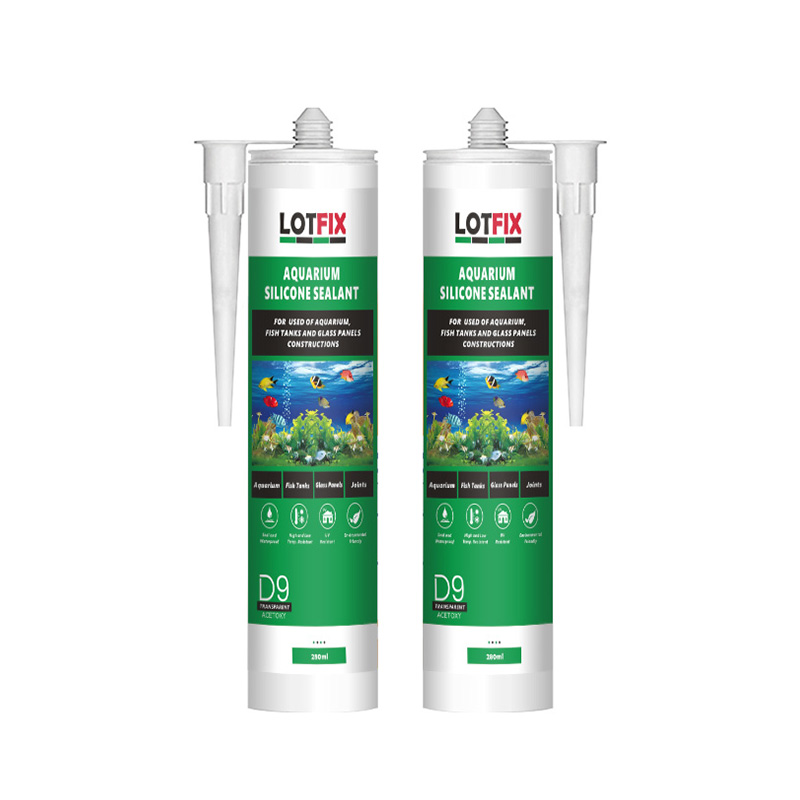
Aquarium silicone sealant is used for bonding glass tanks, sealing aquarium joints, and repairing selected leakage areas where glass-to-glass adhesion and water resistance are required. Compared with ordinary building sealants, aquarium applications need more careful product selection because the sealant may stay in long-term contact with water and must maintain strong bonding between glass panels.
For buyers, installers, and distributors, the key question is not only whether the sealant can stick to glass. The product should match the intended use: new tank assembly, small repair, glass joint sealing, display tank production, or maintenance supply.
Aquarium silicone sealant is designed for glass tank bonding and sealing where strong adhesion, water resistance, flexibility, and long-term joint stability matter. It is commonly used in fish tanks, glass aquariums, display tanks, terrariums, and selected glass water containers.
A suitable aquarium silicone sealant should be selected specifically for glass tank applications, not simply replaced by a random general-purpose construction sealant.
| Application Need | Why Aquarium Silicone Matters |
|---|---|
| Glass-to-glass adhesion | Aquarium joints depend on stable bonding between glass panels. |
| Long-term water exposure | The sealant must remain stable after continuous contact with water. |
| Joint flexibility | Glass tanks may experience pressure, handling movement, and temperature changes. |
| Clean appearance | Transparent or black sealant is often selected based on tank style and market preference. |
Aquarium bonding is usually glass-to-glass bonding. The sealant must contact clean glass surfaces and form a continuous, well-shaped joint. Surface preparation, bead size, curing time, and correct tank support all affect the final result.
Dust, oil, moisture, old sealant, and cleaning residue can reduce adhesion and lead to weak bonding.
Gaps, bubbles, thin spots, or broken bead lines may affect water resistance and tank joint strength.
Aquarium joints should not be filled with water before the sealant is fully cured according to product guidance.
Glass thickness, tank size, joint design, and support structure must match the aquarium application.
Aquarium repair and new tank assembly have different requirements. Repair work often focuses on solving a localized leakage problem, while new tank assembly requires full joint bonding, correct glass positioning, and consistent sealing performance across the whole structure.
| Use Case | Main Focus | Buyer Note |
|---|---|---|
| Aquarium repair | Fixing selected leakage points or resealing damaged areas | Old sealant, dirty glass, and hidden joint damage should be properly handled before resealing. |
| New tank assembly | Bonding glass panels and forming complete structural joints | Tank size, glass thickness, joint width, and curing conditions must be carefully controlled. |
| Retail maintenance supply | Small repair, resealing, and consumer-level use | Clear labeling and usage instructions help reduce misuse by end users. |
Important: sealant can help with many aquarium joints, but it should not be used to hide serious glass damage, poor tank design, weak support, or unsafe assembly conditions.
Ordinary building sealant is usually designed for windows, doors, tiles, walls, kitchens, bathrooms, or general construction gaps. Aquarium sealant is used in a more specific environment where long-term water contact and glass tank bonding are central requirements.
| Comparison Point | Aquarium Silicone Sealant | Ordinary Building Sealant |
|---|---|---|
| Main purpose | Glass tank bonding, aquarium joint sealing, selected water-contact repairs | General construction gaps, perimeter sealing, finishing, waterproofing details |
| Application environment | Continuous water exposure after full curing | Indoor or outdoor building joints, usually not designed for aquarium tank bonding |
| Substrate focus | Glass-to-glass bonding | Glass, tile, aluminum, concrete, wall surfaces, and mixed construction materials |
| Ordering risk | Wrong formula may cause weak tank joints or unsuitable water-contact performance | Good for its intended uses, but should not be assumed suitable for aquariums |
Before placing an order, buyers should confirm:
• Whether the product is for new tank assembly, aquarium repair, retail maintenance, or glass tank production
• Whether the sealant is suitable for glass-to-glass bonding and aquarium joint sealing
• Required color, such as transparent, black, or market-specific options
• Cartridge size, carton quantity, shelf life, label language, and packaging style
• Whether OEM packaging or private label supply is needed
• Whether samples are needed for adhesion, curing, and application testing before bulk purchase
For aquarium applications, the safest purchasing method is to define the use case first. A product suitable for general glass sealing is not automatically suitable for aquarium tank bonding, and a small repair product may not be the right choice for full new tank assembly.
LOTFIX provides silicone sealant and related sealing products for construction, decoration, distribution, and project applications. If you are comparing aquarium silicone sealant, glass silicone sealant, neutral silicone sealant, acetic silicone sealant, PU foam, or other sealing solutions, you can visit the LOTFIX homepage to learn more about available product options.
For product selection, sample requests, packaging details, or OEM cooperation, please contact us and share your application requirements.
Visit LOTFIX Homepage Contact LOTFIX