Mobile / WhatsApp
E-mail
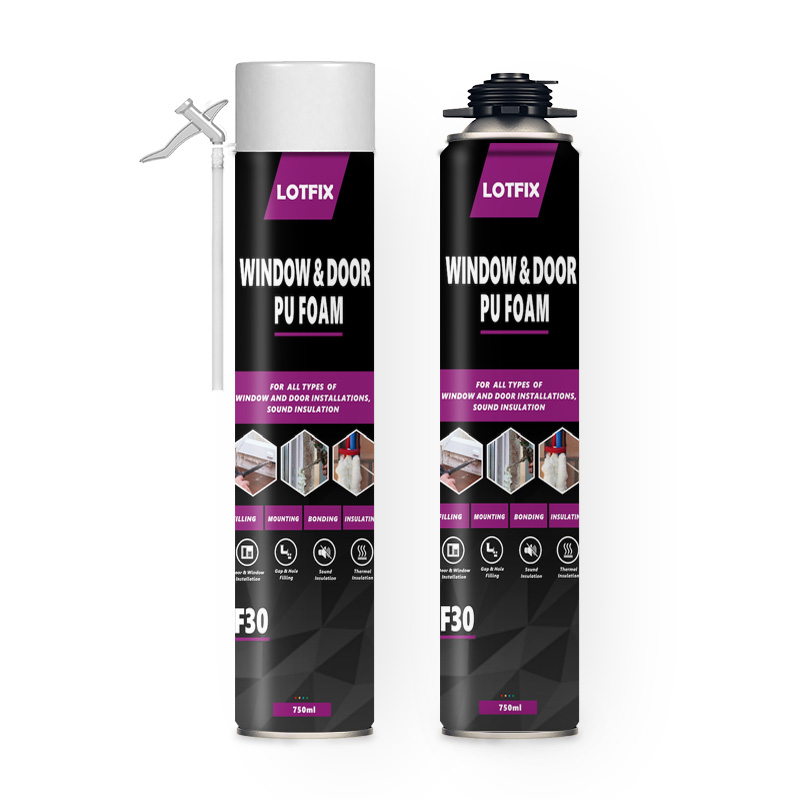
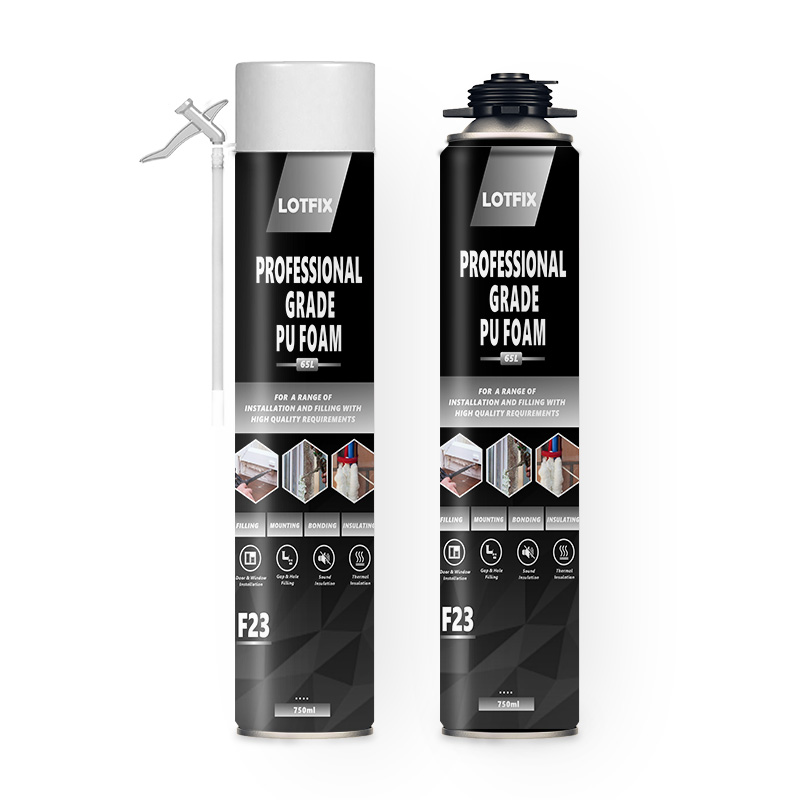
PU Foam Sealant is one of the most practical materials in construction sealing, installation, and insulation work. It is widely used to fill gaps, block air leakage, improve thermal performance, reduce sound transmission, and support fast on-site finishing. This guide explains what the product is, how it is used, what types are available, how to select the right version, and what quality factors matter in real projects.
PU foam sealant is a polyurethane-based expanding sealant designed for filling gaps, sealing joints, improving insulation, and supporting installation work. After application, the material expands and cures into a rigid or semi-rigid foam structure that can close irregular voids more effectively than many traditional sealants.
In practical applications, PU foam sealant is suitable for projects requiring more than just surface sealing. It is ideal when applications require material to penetrate deep into cavities, expand to fill spaces, and remain stable after curing. Therefore, it is widely used in doors and windows, wall perforations, pipe openings, renovation gaps, and insulation-related projects.
PU foam sealant is more than just a sealing material. In many projects, it serves multiple functions simultaneously: contributing to airtightness, noise reduction, insulation, dustproofing, insect control, and supporting installations. Therefore, it is often considered a functional building material, not just a simple adhesive.
PU foam sealant may be called by different names in different markets, product catalogs, or procurement documents.
| Name | Meaning / Usage | Notes |
|---|---|---|
| PU Foam Sealant | General industry name | Common in B2B product descriptions |
| PU Foam | Short form | Often used in sales, packaging, and catalogs |
| Polyurethane Foam | Full material name | More technical and formal |
| Expanding Foam | Describes the expansion property | Useful for end users and general buyers |
| Foam Sealant | Functional name | Highlights sealing purpose |
| PU Foaming Agent | Used in some markets | May refer to the same product category |
| Spray Foam | Application-based name | Common in DIY and construction contexts |
In procurement and technical communication, it is often best to use both the functional name and the material name, such as PU Foam Sealant / Polyurethane Foam, so the product is clearly understood by different audiences.
PU Foam Sealant works by dispensing a reactive polyurethane formulation from a pressurized container. Once it is applied, the material reacts with moisture in the air or on the substrate, begins to expand, and then cures into foam.
The expansion stage is what gives the product its main value. Instead of only covering the surface, the foam reaches into irregular shapes, narrow joints, and deeper cavities. After curing, the material forms a stable structure that can help reduce unwanted movement of air, noise, and heat.
This is why PU Foam Sealant is especially useful in construction. Many building joints are not perfectly uniform, and many openings are too deep or uneven for ordinary sealants to fill efficiently. The expanding behavior allows the product to adapt to the geometry of the gap, rather than forcing the installer to use excessive material or multiple layers.
Different projects require different foam properties. Polyurethane foams are typically classified by system, performance, and application.
By curing system
• One-component PU Foam: Cures by moisture in the air or on the substrate. It is the most common type and is suitable for general construction, installation, and repair tasks.
• Two-component PU Foam: Cures through chemical reaction between two components after mixing. It usually offers faster curing and more controlled performance, and is often used where productivity or consistency is important.
• Standard expansion: Suitable for general filling work where volume increase is acceptable.
• Low expansion: Recommended for doors, windows, and sensitive frames where over-expansion may cause deformation.
• High expansion: Useful for larger cavities and deep voids where maximum fill is needed.
• General purpose: For common building gaps and routine sealing work.
• Fire-rated / fireblock: Used where fire performance is required by building regulations or project specifications.
• High density: Offers stronger structure and better stability in demanding applications.
• Low odor / low VOC: More suitable for indoor environments and occupied spaces.
• Weather-resistant: Designed for better long-term exposure performance.
• Insulation grade: Focused on thermal and acoustic performance.
PU Foam Sealant is popular because it solves practical problems that appear in almost every building project. The following scenarios represent the most common and commercially relevant uses.
5.1 Window and door installation
This is one of the most important uses. After the frame is installed, there is usually a surrounding gap between the frame and the wall. PU Foam is used to fill this space, improve air tightness, reduce noise, and support the installation structure.
For this type of job, low-expansion foam is often preferred because excessive expansion can deform the frame or create finishing problems.
5.2 Wall penetrations and structural openings
Where pipes, conduits, or cables pass through walls or floors, the opening is often irregular. Foam sealant can fill these voids quickly and help prevent dust, insects, and unwanted air movement from passing through.
5.3 HVAC and duct sealing
In HVAC systems, foam is often applied around ducts, pipe penetrations, and service gaps. The goal is to reduce leakage, improve thermal efficiency, and support the overall system performance.
5.4 Insulation and energy-saving work
Foam sealant is frequently used in attics, basements, crawl spaces, and other areas where air leakage affects energy consumption. By filling small gaps and voids, it helps reduce heat loss in winter and heat gain in summer.
5.5 Interior renovation and repair
In renovation work, it is commonly used for gap filling around cabinets, skirting lines, wall corners, and rough construction joints. The speed of application makes it useful for finishing tasks and site repairs.
5.6 Cold storage and special engineering
Cold rooms, refrigerated spaces, and certain industrial installations may require foam with better insulation and stability. These projects need more careful product selection because temperature control and long-term sealing performance are critical.
The value of PU Foam Sealant comes from a combination of functional benefits rather than one single property.
| Benefit | Why it matters | Typical project impact |
|---|---|---|
| Expansion fill | Reaches into irregular gaps | Reduces installation time and improves coverage |
| Air sealing | Helps control leakage | Improves comfort and energy efficiency |
| Thermal insulation | Limits heat transfer | Supports building energy performance |
| Sound reduction | Reduces airflow and vibration paths | Improves indoor comfort |
| Fast construction | Quick dispensing and curing | Increases installation productivity |
| Versatile use | Works across many site conditions | Useful for multiple trades and project types |
In practical terms, the product is often selected because it saves labor, reduces follow-up work, and allows the installer to complete sealing and filling in one step. That combination is especially valuable in residential construction, commercial fit-out, and batch installation work.
A serious product evaluation should go beyond marketing claims. The following parameters are the most relevant for procurement, quality control, and technical review.
| Parameter | What it means | Why it matters |
|---|---|---|
| Density | The compactness of the cured foam structure | Affects strength, texture, and long-term stability |
| Expansion ratio | How much the foam grows after dispensing | Determines filling capacity and control |
| Initial tack / foam stability | How well the foam stays in place before full cure | Important for vertical or overhead application |
| Curing time | Time required for surface dry and full cure | Impacts project speed and follow-up processing |
| Adhesion strength | Bonding performance on substrates | Influences durability and resistance to detachment |
| Dimensional stability | Resistance to shrinkage, collapse, or cracking | Critical for long-term sealing quality |
| Temperature resistance | Performance under hot and cold conditions | Needed for indoor, outdoor, and special environments |
| Fire performance | Behavior under flame or fire exposure | Essential for certain building codes and project specs |
| VOC / odor | Volatile emissions and smell level | Important for indoor use and occupied spaces |
| Water resistance | Ability to resist moisture impact | Relevant for durability and insulation performance |
For most buyers, the most important combination is not the highest number in one single parameter, but the balance between expansion control, curing stability, adhesion, and application suitability.
Correct use is essential. Even a good product can perform poorly if the application process is not controlled properly. The following workflow reflects standard site practice.
8.1 Before application
• Clean the substrate and remove dust, oil, loose particles, and construction residue.
• Make sure the surface is dry unless the specific product allows light moistening for better curing.
• Check whether the ambient temperature is within the recommended application range.
• Shake the can or prepare the two-component system as required by the product instructions.
• Protect nearby finished surfaces if overflow or expansion may affect appearance.
8.2 During application
• Do not overfill the cavity. Leave room for expansion.
• For deep gaps, apply in layers if necessary.
• For window and door frames, use low-expansion foam to reduce pressure on the frame.
• Maintain steady dispensing for a more uniform result.
• Use appropriate nozzle control to avoid waste and uneven distribution.
8.3 After application
• Allow the foam to cure before trimming or finishing.
• Cut excess cured foam with a knife or mechanical tool.
• Apply surface finishing materials if the area will be exposed.
• Use uncured foam cleaner or acetone-based cleaner only before the material sets.
8.4 Curing considerations
Temperature, humidity, substrate condition, and gap size all affect curing. Too cold a condition may slow the reaction. Too dry a surface may reduce curing performance in one-component systems. Too much product in one pass may lead to poor internal curing or local collapse.
Most installation failures can be traced back to substrate condition, environmental control, or incorrect product selection. A practical troubleshooting approach helps avoid wasted labor and rework.
9.1 Foam output is insufficient
Possible causes: low temperature, weak can pressure, blocked nozzle, poor product quality, or incorrect shaking/preparation.
Solution: check storage temperature, confirm product shelf condition, clean the nozzle, and verify that the product is within its recommended use range.
9.2 Shrinkage or collapse after curing
Possible causes: unstable formulation, excessive filling, insufficient curing environment, or poor product consistency.
Solution: use a more stable formulation, control the fill volume, and ensure proper curing conditions.
9.3 Cracking after curing
Possible causes: over-expansion, external stress, structural movement, or uneven substrate conditions.
Solution: switch to a lower-expansion product for sensitive applications and avoid overfilling the cavity.
9.4 Poor adhesion to the substrate
Possible causes: dust, oil, grease, water film, poor substrate compatibility, or incorrect application method.
Solution: clean and prepare the surface properly and confirm compatibility before use.
9.5 Strong odor
Possible causes: low-grade raw materials, poor formulation, or insufficient ventilation during and after installation.
Solution: choose a low-odor formulation for indoor work and ensure adequate site ventilation.
Buying foam sealant should not be based only on price. A low-priced product may look acceptable during spraying, but still fail later through shrinkage, cracking, odor, or poor bonding. In real engineering work, consistent quality is more important than a high foam volume claim.
Good quality indicators
• Foam structure is fine and uniform after curing.
• The product expands in a controlled way instead of pushing out uncontrollably.
• Cut surfaces look compact rather than loose or brittle.
• The foam maintains shape without obvious collapse or shrinkage.
• Bonding to common substrates is stable and reliable.
• Odor is acceptable for the intended application environment.
• Specifications are clear and consistent across batches.
Warning signs of poor quality
• Very inconsistent expansion behavior
• Noticeable shrinkage after curing
• Large cells or loose foam texture
• Weak adhesion to normal construction materials
• Heavy smell in indoor applications
• Packaging that gives no clear technical information
Different projects have different priorities. The right choice depends on expansion control, curing speed, fire performance, and environmental requirements.
| Project type | Recommended foam type | Main reason |
|---|---|---|
| Window and door installation | Low expansion foam | Protects the frame from deformation |
| General construction sealing | General purpose one-component foam | Easy to use and widely compatible |
| Fire-sensitive areas | Fire-rated foam | Supports fire performance requirements |
| Indoor renovation | Low odor / low VOC foam | Better suited for occupied spaces |
| Cold storage / insulation work | Insulation grade foam | Better thermal sealing performance |
| Batch engineering installation | Stable performance foam | Helps maintain consistency across sites |
| Deep cavities / void filling | Higher expansion foam | Improves fill efficiency |
For purchasing decisions, it is usually helpful to define the project first and then match the product by expansion behavior, fire rating, odor level, and application environment. That approach is more reliable than selecting by price alone.
Like many chemical construction products, PU foam sealant should be handled with proper storage and safety control. Stable product performance depends not only on the formulation, but also on how the product is stored before use.
12.1 Storage
• Store in a cool, dry, and ventilated area.
• Keep away from direct sunlight and high heat.
• Do not store in conditions that may damage the can pressure or formulation stability.
• Follow the shelf-life guidance from the manufacturer.
12.2 Transport
• Handle as a pressurized product.
• Avoid rough impact, puncture, or prolonged heat exposure during transportation.
• Check packaging integrity upon receipt.
12.3 Safety
• Use in a well-ventilated environment.
• Wear gloves and basic protective equipment when necessary.
• Avoid contact with skin, eyes, and finished surfaces.
• Clean uncured foam immediately with suitable cleaner.
• Follow local safety and compliance requirements for chemical products.
PU Foam Sealant is a highly practical polyurethane material used for sealing, filling, insulation, and installation work. Its value comes from its ability to expand into irregular spaces and cure into a stable foam structure that improves project efficiency and functional performance.
For buyers and engineers, the key is not just knowing the product name. The real decision lies in choosing the right type for the right project: low-expansion for windows and doors, fire-rated for compliance-sensitive areas, low-odor for indoor environments, and stable insulation-grade foam for thermal applications. When the product is matched correctly, PU Foam Sealant becomes a reliable and efficient solution for modern construction and installation work.